
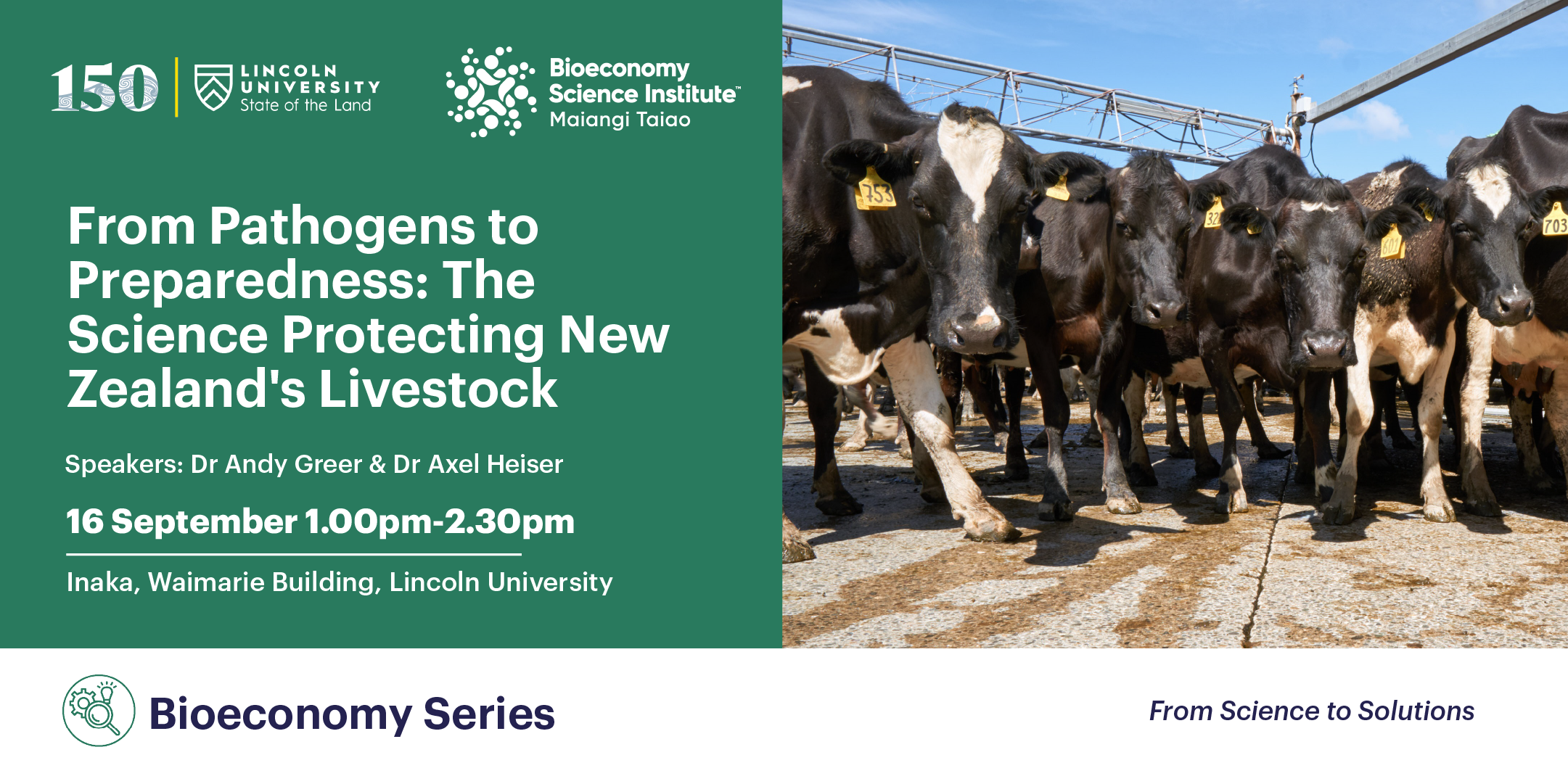
The Bioeconomy Series brings together research, innovation, and real-world application to explore how science is shaping the future of land-based systems in Aotearoa. The series connects students, staff, and partners through informed discussion on emerging opportunities and challenges.
Livestock health underpins the productivity, sustainability, and resilience of New Zealand's primary industries. From endemic parasites and antimicrobial resistance to emerging pests and diseases, farmers face an increasingly complex range of biological challenges that require both practical management and ongoing scientific innovation.
This session explores how research is helping build more resilient livestock systems—from improving animal health and farm-level disease management to strengthening New Zealand's ability to respond to future biosecurity threats.
Dr Andy Greer (Lincoln University) will discuss his research into parasite control, anthelmintic resistance, and livestock health management, highlighting the role that effective on-farm biosecurity and evidence-based management play in maintaining productive and resilient farming systems.
Dr Axel Heiser (Bioeconomy Science Institute) will outline how the Better Border Biosecurity (B3) Partnership is widening its scope beyond plants to include animals and the animal biosecurity research now underway at Bioeconomy Science Institute.
Together, the speakers will explore how science, surveillance, and collaboration work across the entire biosecurity continuum—from protecting animal health on farm to strengthening national preparedness for emerging threats. The discussion will highlight why resilient livestock systems are essential to the future of New Zealand's bioeconomy.
Join us for an engaging discussion on how research is helping safeguard animal health, support productive farming systems, and strengthen New Zealand's resilience to future biosecurity challenges.
Wednesday 16th September
1.00pm-2.30pm
Inaka, Waimarie Building, Lincoln University
Timings
1:00 – 1:10 pm | Welcome and introductions
1:10 – 1:25 pm | Presentation 1 – Dr Andy Greer, Lincoln University
1:25 – 1:40 pm | Presentation 2 – Dr Axel Heiser, Bioeconomy Science Institute
1:40 – 2:10 pm | Moderated discussion and audience Q&A
2:10 – 2:30 pm | Networking
About Our Speakers
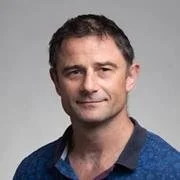
Dr Andy Greer, Lincoln University
I investigate aspects of parasitology, epidemiology, nutrition, immunology, metabolism, on-farm technology and farm systems research to improve quantity and quality of livestock production. My primary focus is parasitology in sheep, but I also work on cattle parasitology as well as general health and production. My research philosophy is one that includes the use of strong scientific support and evidence, utilizing where possible the latest and most relevant research techniques to provide a sound understanding of the biological principles that underpin real-world problems. I believe that all research must have a functional use and outcome to assist in solving these problems. I have ongoing collaborative links with researchers from within New Zealand institutions and also a number of European partners. I am a past-president of the New Zealand Society of Animal Production, and director for DEEResearch NZ, and currently serve on the technical advisory group for the national parasite strategy group Wormwise NZ, and are involved in several international journals, including being Co-Editor In Chief for Veterinary Parasitology, Associate Editor for Animal Production Science and on the editorial board for Parasite Immunology
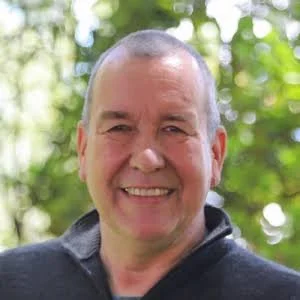
Dr Axel Heiser, Bioeconomy Science Institute
After earning my PhD in immunology/cell biology from the University of Kiel in Germany, my career has spanned research institutions in Germany, the USA, and New Zealand. Initially I worked on transplantation immunology and cancer vaccines. Since 2010, my research has focused on agricultural research, including innovative approaches to veterinary vaccine development, diagnostics, and immune health, integrating immunology with animal health, nutrition, reproduction, and animal production.
Click here to see more events