
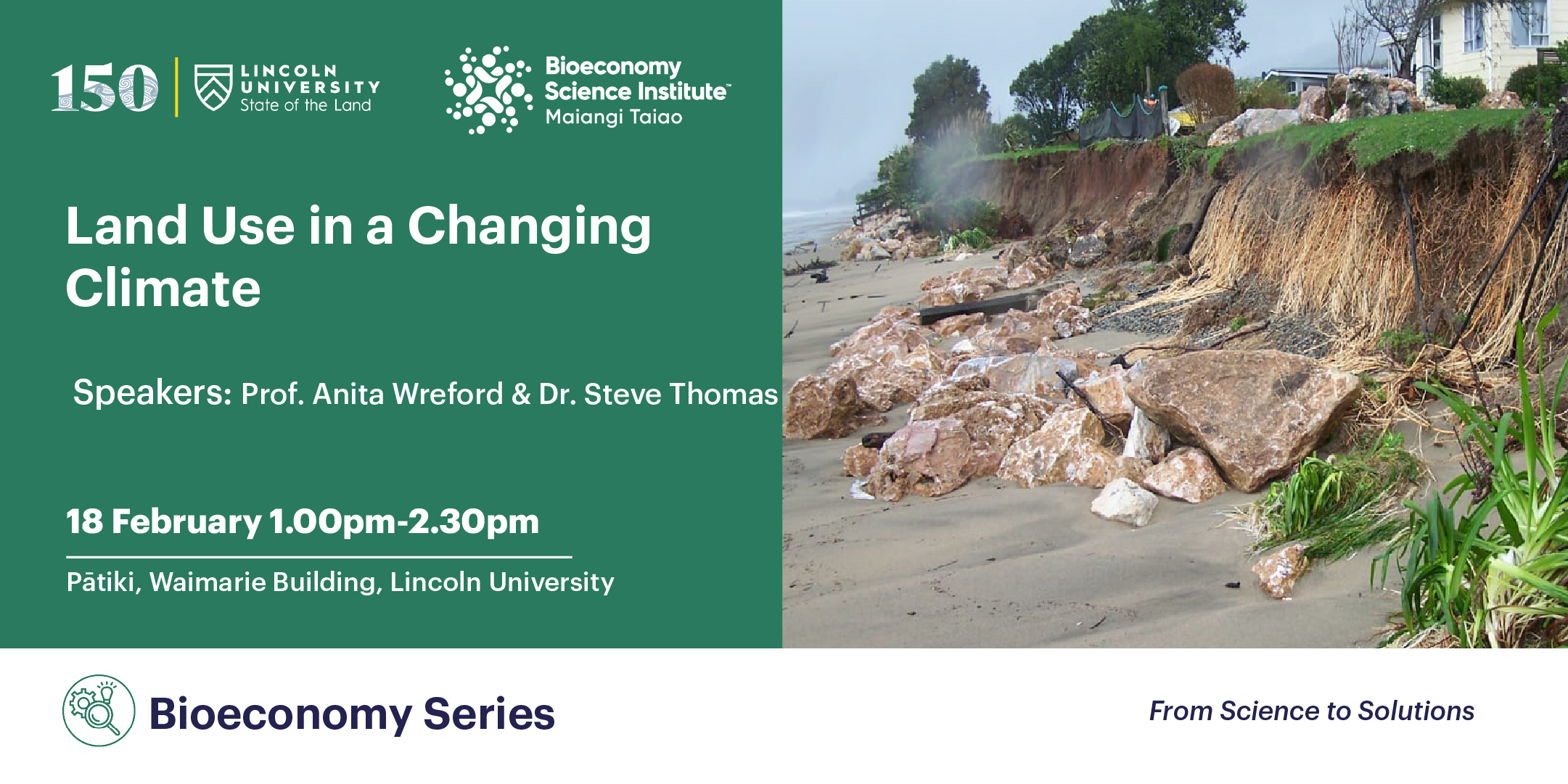
We’re thrilled to announce the launch of the brand new Bioeconomy Series, held as part of Return to Campus Week at Lincoln University. This week celebrates new beginnings and collaboration across our campus, with poster displays, research showcases, and events designed to reconnect students, staff, and partners while sparking fresh conversations for the year ahead.
Our first event explores the future of land use under a changing climate. As temperatures rise and weather patterns shift, New Zealand’s landscapes — and the decisions we make about how we use them — are set to undergo profound transformation. But what might those changes look like? Which regions are most vulnerable or most adaptable? And how can research help guide sustainable land-use choices for the decades ahead?
Dr Anita Wreford, Lincoln University, will share insights from her MPI-funded project spanning Lincoln University, Bioeconomy Science Institute Maiangi Taiao partners in former AgResearch and Plant and Food Research, and colleagues in the Commerce Faculty. Her work examines how climate change will reshape land-use options across Aotearoa and what this means for environmental, economic, and community outcomes. Dr. Steve Thomas from the Bioeconomy Science Institute will offer a complementary perspective, exploring how current research and modelling can support decision-making and spark new approaches to future land-use planning.
Together, they’ll unpack the challenges, opportunities, and emerging scenarios that could redefine New Zealand’s rural landscapes.
Join us to explore how research is helping us understand the future of land use — and what it could mean for resilience, adaptation, and long-term sustainability in Aotearoa.
Wednesday 18th February 2026
1.00pm-2.30pm
Pātiki, Waimarie Building, Lincoln University
Timings
1:00 – 1:10 pm | Welcome and introductions
1:10 – 1:25 pm | Presentation 1 – Prof. Anita Wreford, Lincoln University
1:25 – 1:40 pm | Presentation 2 – Dr. Steve Thomas, Bioeconomy Science Institute Maiangi Taiao
1:40 – 2:10 pm | Moderated discussion and audience Q&A
2:10 – 2:30 pm | Networking
About Our Speakers

Prof. Anita Wreford, Lincoln University
I am an applied economist specialising in adaptation to climate change, with a particular focus on agriculture and the primary sector. I have 19 years of research experience, across many areas of climate change adaptation, including economic evaluations of impacts and adaptation (focusing particularly on applying robust methods to deal with climate uncertainty); identifying and evaluating the effectiveness of adaptation options across sectors; risk assessment; community resilience to extreme weather events; and adaptation decision-making among various stakeholders. Currently based in the AERU at Lincoln University, I lead the Deep South National Science Challenge’s programme on Impacts and Implications. I am a lead author on two Intergovernmental Panel on Climate Change (IPCC) reports: A Special Report on Climate Change and Land (2019) and the forthcoming Australasia Chapter of the Sixth Assessment Report (2021). I work closely with policy makers both at a national level and local government (in the UK and New Zealand), providing advice and analysis for climate adaptation decisions and conducted work for the EU Commission and the OECD, the Scottish Government’s ClimateXChange programme, and the UK’s Committee on Climate Change.
Dr Steve Thomas, Bioeconomy Science Institute
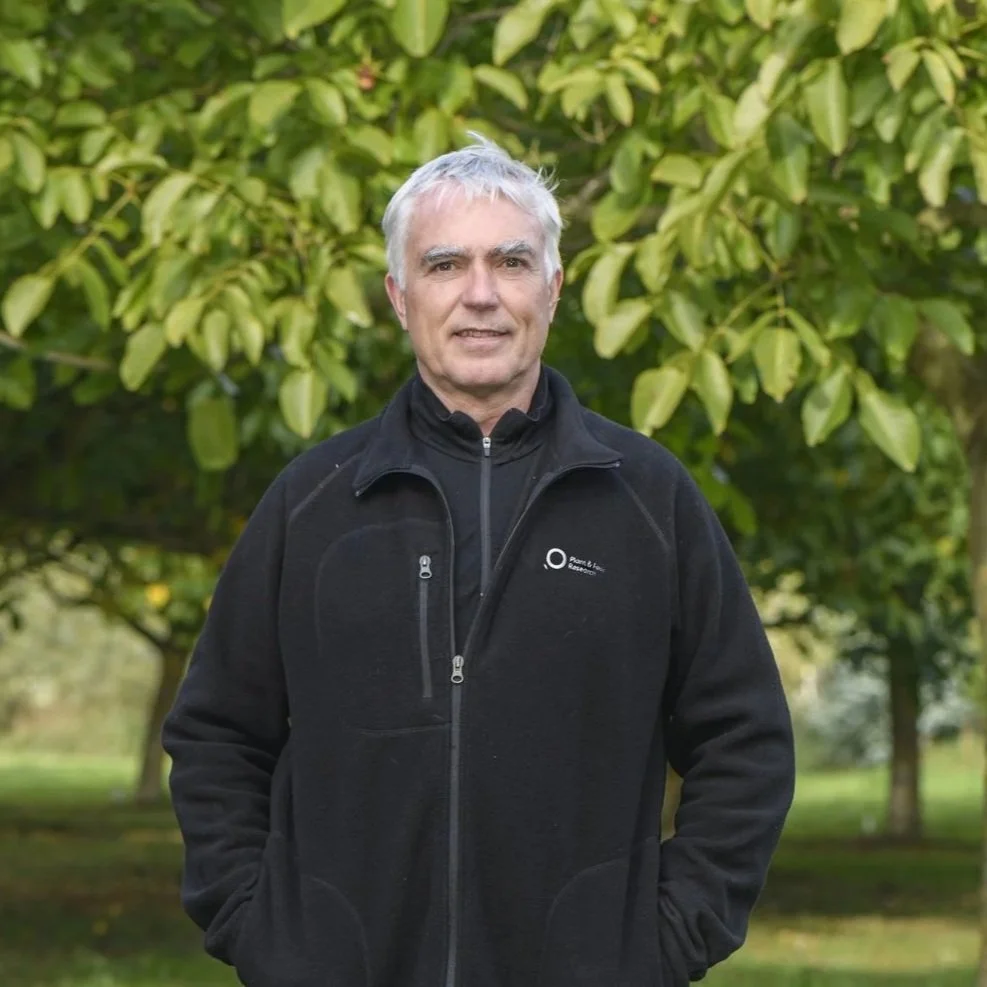
Dr Steve Thomas is a Principal Scientist and Team Leader at the Bioeconomy Science Institute. He earned his PhD in Soil science from Lincoln University, where his research examined the effects of elevated atmospheric carbon dioxide on belowground plant–soil carbon dynamics.
Dr Thomas has held research positions at Crop & Food Research and Plant & Food Research, where he contributed to advancing scientific understanding of soil–water–plant interactions within agricultural systems. His work has provided quantitative insights into how land‑management practices influence environmental outcomes, with particular emphasis on greenhouse gas emissions and impacts on water quality.
More recently, his research has expanded to evaluate profitable land‑use options that minimise greenhouse gas emissions and reduce water contamination under a changing climate, supporting the transition toward more sustainable and resilient production systems.
Click here to see more events