
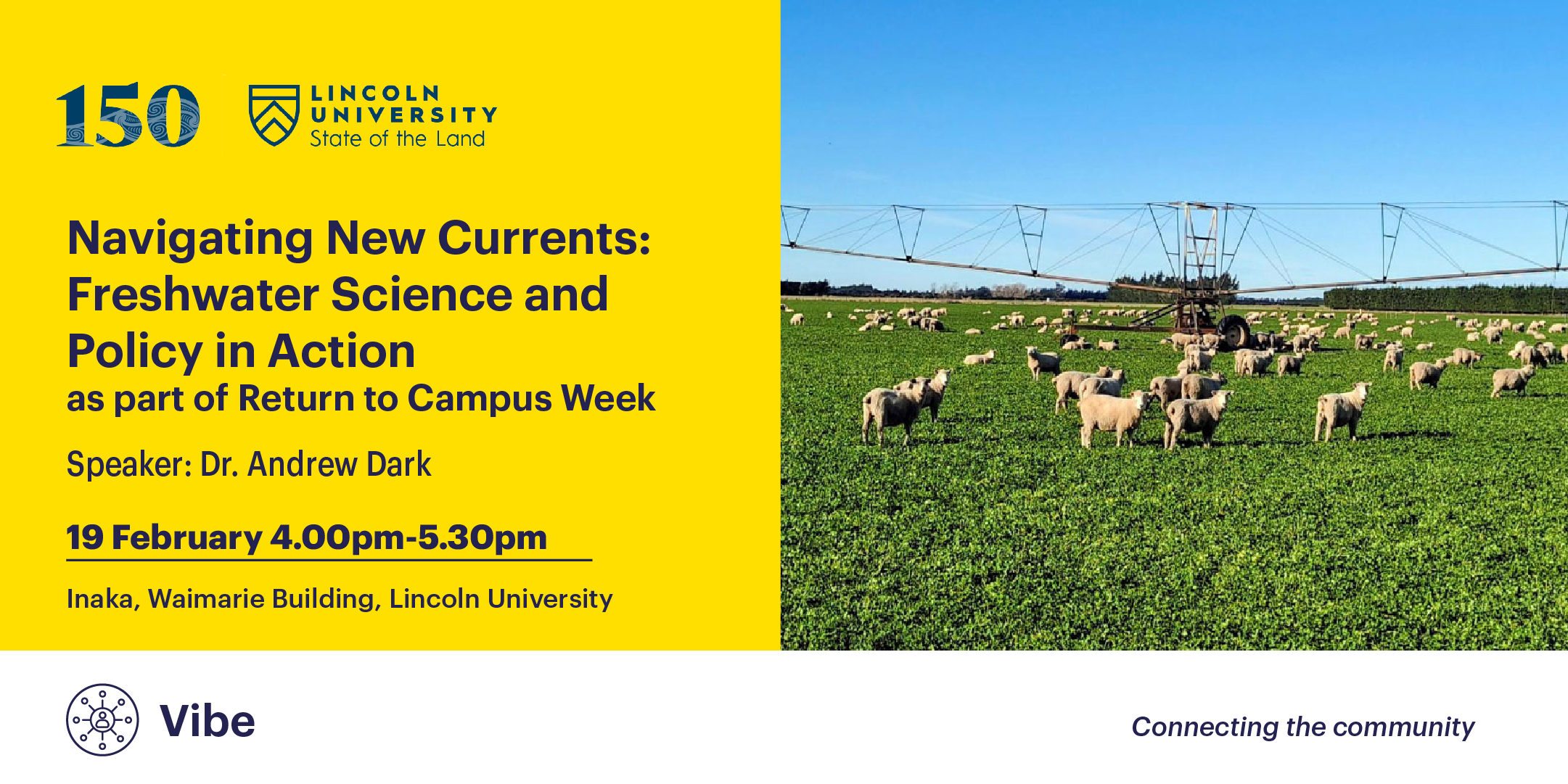
We’re kicking off the year with the first State of the Land Vibe Event for 2026, held as part of Return to Campus Week — a celebration of new beginnings, reconnection, and discovery at Lincoln University. Return to Campus Week brings our community back together with a full line-up of activities, including the launch of new research initiatives, poster displays in the Waimarie foyer, and a series of inspiring talks and networking sessions to set the tone for the year ahead.
Freshwater is the lifeblood of New Zealand’s landscapes, communities, and primary industries — yet increasing pressure from climate change, land-use intensification, and competing demands is reshaping how water is managed across the country. From irrigation and urban supply to environmental flows and catchment health, decisions about water are becoming more complex, contested, and consequential.
At the forefront of understanding these challenges is Aqualinc, a New Zealand–based consultancy specialising in water resources, hydrology, and integrated catchment management. In this Vibe session, Dr. Andrew Dark, Technical Director at Aqualinc, will share insights from his work at the science–policy interface, exploring how robust data, modelling, and systems thinking can support better freshwater decision-making. He’ll discuss emerging trends in water management, the role of innovation and evidence in navigating uncertainty, and what a resilient, water-secure future could look like for Aotearoa.
Join us for a thought-provoking conversation on the state of our freshwater, the choices shaping its future, and how science-led insight can help balance environmental, cultural, and economic values in a changing climate.
Thursday 19th February 2026
4.00pm-5.30pm
Inaka, Waimarie Building
Timings
4:00pm – Arrival and networking
4:10pm – Welcome from Prof. Chad Hewitt, Provost, Lincoln University
4:15pm – Overview on what LU is doing in this space
4:20pm – Keynote presentation - Dr. Andrew Dark, Aqualinc
4:45pm – Q&A
5:00pm – Networking
5:30pm – Event concludes
About Our Speaker
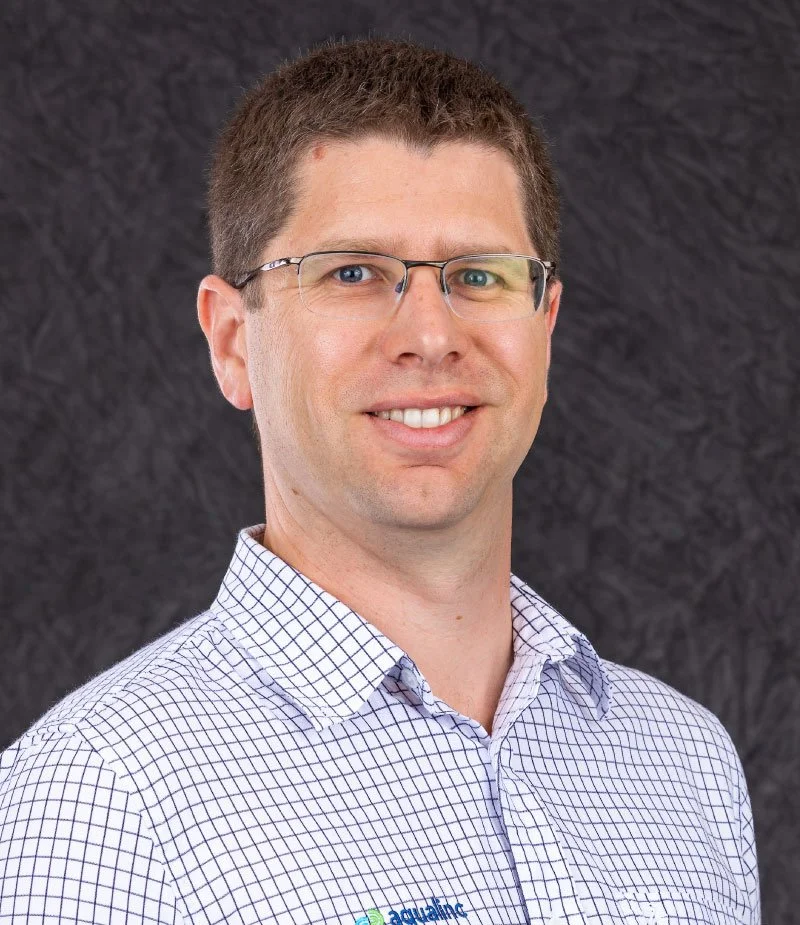
Andrew is a water resource engineer with 15 years of post-qualification experience. He has significant technical expertise in catchment, district and national-scale modelling and analyses, and an in-depth knowledge of water management issues.
Andrew’s breadth of expertise extends to projects that involve hydraulic and hydrological modelling of surface and groundwater systems, water storage, and hydrological analysis. He is also experienced in irrigation scheme design, soil moisture and irrigation water requirements modelling, GIS, and the resource consenting process for groundwater and surface water takes.
Through involvement in various strategic water management projects for both councils and scheme developers around New Zealand, Andrew has gained an in-depth knowledge of water resource issues. He has investigated the hydrological feasibility of numerous water resource development options, and he has developed specialist skills in supply-and-demand modelling of surface and groundwater systems.
These projects have involved collation of river flow and climate data (including climate change projections), filling gaps in records using regression and interpolation techniques, determining irrigation water requirements based on climate, soil and land use, and implementing allocation rules in simulation models. Results from Andrew’s models have assisted stakeholders with understanding the potential effects of bulk water supply schemes and changes to allocation rules on river flow regimes and water supply reliability. Andrew has significant experience in presenting results to stakeholder groups with a range of backgrounds and levels of technical expertise.
Click here to see more events