
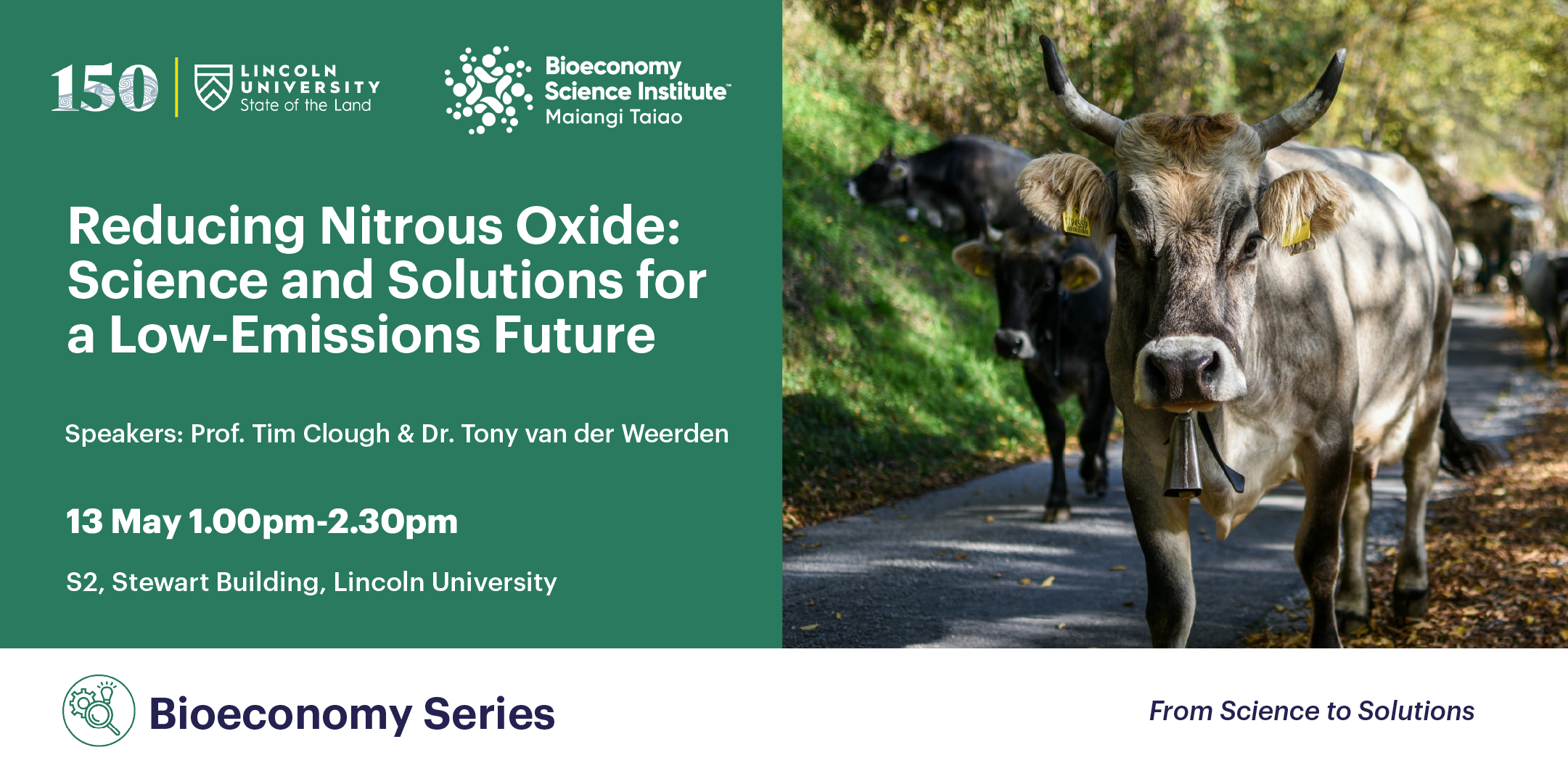
The Bioeconomy Series continues with its next event, focusing on some of the most critical challenges facing land-based systems: reducing nitrous oxide and methane emissions. As potent greenhouse gases closely linked to agricultural production, nitrous oxide and methane sit at the centre of conversations about climate action, farm performance, and the future of sustainable land use in Aotearoa New Zealand. Addressing these emissions is essential to meeting national climate targets while supporting productive, resilient farming systems.
This event will delve into the latest research, tools, and on-farm solutions aimed at reducing nitrous oxide and methane emissions across agricultural landscapes. Professor Tim Clough (Lincoln University) will draw on his extensive research and leadership in this field, sharing insights from long-running trials, mitigation technologies, and policy-relevant science that underpin practical emissions reduction strategies. Dr. Tony van der Weerden (Bioeconomy Science Institute) will complement this perspective by highlighting applied research and collaborative projects underway across the bioeconomy, exploring how innovation, systems thinking, and cross-sector partnerships are translating scientific knowledge into real-world impact.
Join us to explore the science, innovation, and practical pathways shaping the future of low-emissions farming in Aotearoa New Zealand.
Wednesday 13th May
1.00pm-2.30pm
S2, Stewart Building, Lincoln University
Timings
1:00 – 1:10 pm | Welcome and introductions
1:10 – 1:25 pm | Presentation 1 – Prof. Tim Clough, Lincoln University
1:25 – 1:40 pm | Presentation 2 – Dr. Tony van der Weerden, Bioeconomy Science Institute
1:40 – 2:10 pm | Moderated discussion and audience Q&A
2:10 – 2:30 pm | Networking
About Our Speakers
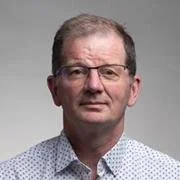
Prof. Tim Clough, Lincoln University
I work in the area of terrestrial ecosystems with a focus on agriculture, and the grazed pasture ecosystems within these. I use stable isotope science to trace and understand the transformations and fate of nitrogen and carbon in these systems. My research has a strong focus on understanding the magnitude and mitigation of nitrogen loss pathways at both fundamental and applied levels. Part of my research is applied and has investigated both agricultural management (e.g. irrigation) effects on nitrous oxide (N2O) emissions, and the efficacy of potential N2O mitigation options (e.g. manipulation of ruminant urinary constituents). I also perform fundamental research, focusing on improving our understanding of the integrated effects of soil physical, biological and chemical conditions that lead to both the production of N2O and its reduction to environmentally dinitrogen. I am applying my knowledge of nitrogen cycling processes to the aquatic sphere while looking at nitrate removal and N2O emissions from the vadose zone, streams and rivers. I am a Fellow of the New Zealand Soil Science Society, and a Fellow of the Soil Science Society of America.
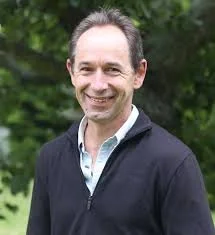
Dr. Tony van der Weerden, Bioeconomy Science Institute
I am a soil scientist with an interest in greenhouse gas emissions from soils. I work on improving our understanding of drivers of nitrous oxide and ammonia emissions from pastoral systems, and include research into mitigating emissions from agriculture and improving farm-scale and national GHG reporting. I studied at Lincoln University and worked in the UK for 4 years. I now live in Ōtepoti Dunedin and enjoy escaping to Central Otago when time permits.
Click here to see more events