
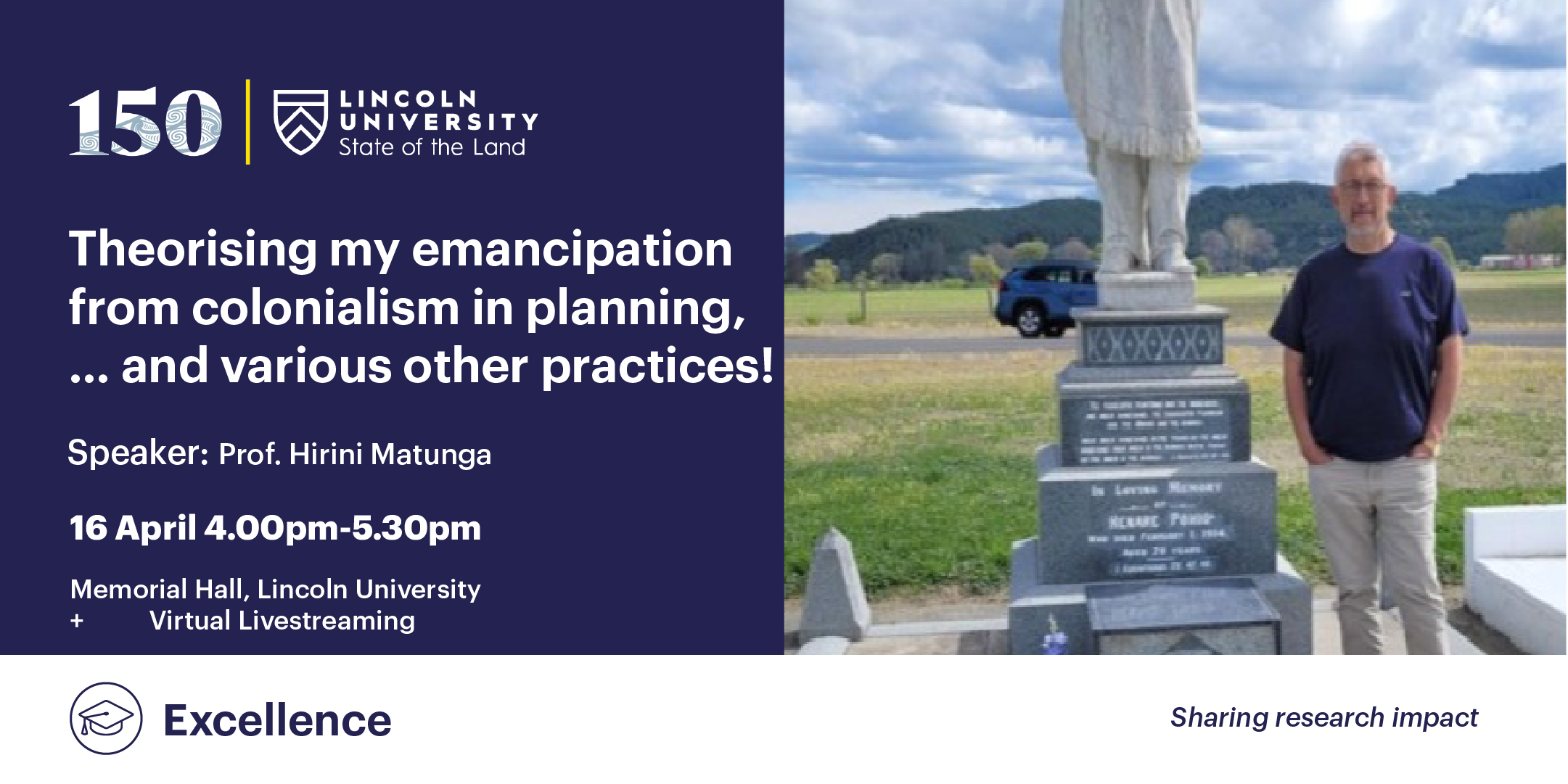
Join us for the next event in Te Whare Wānaka o Aoraki Lincoln University’s Excellence Series, where we showcase outstanding scholarship and real-world research shaping a more sustainable and equitable future for Aotearoa New Zealand. This series brings together leading thinkers whose work challenges assumptions, sparks debate, and encourages us to re-imagine the systems that shape our lives, communities, and landscapes.
Across the colonised world, and countries such as New Zealand, Australia, Canada and the USA to name but a few - planning has been used as tool for spatialising oppression and legitimating exclusion. Even today in jurisdictions such as occupied Gaza and the occupied West Bank, this oppression continues apace and in technicolour real time. Through a lens focused on Aotearoa/NZ, Professor Matunga plots a journey that began at Petane Pa, Hawkes Bay in the 1950’s/60’s, which has been both personal, political and possibly scholarly? but hopefully flips the script on planning as a tool for oppression to planning as a tool for emancipation.
Be part of this powerful and thought-provoking seminar as we explore how planning can move beyond its colonial legacy and become a force for justice, inclusion, and transformation. Join the conversation and engage with ideas that challenge the past while helping to shape a more equitable future.
Thursday 16th April 2026
4.00pm-5.30pm
Memorial Hall, Lincoln University
+ virtual livestream
Timings
4.00 pm - Networking
4.15 pm - Welcome & introduction from LU Vice-Chancellor
4.20 pm - Presentation from Speaker
4.50 pm - Summary
5.00 pm - Networking and questions over drinks and nibbles
5.30pm - Event Ends
About Our Speaker
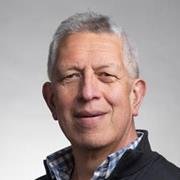
Professor Hirini Matunga
My research focus is Māori self-determination through planning, design, environmental management and policy analysis and Indigenous people’s experience. Taking the view that ‘being Māori’ or ‘being indigenous’ in a colonial context is a research project in itself, ‘self-analysis, ‘self-reflection’, and theorising the role that Māori/Indigenous planning, design, policy, environmental management might play in decolonising processes has been a primary focus alongside hypothesising what ‘Māori/Indigenous planning, design, and environmental policy might be. This is highly interdisciplinary and ‘praxis heavy’ but ‘theory light’ requiring a considerable amount of theorising to better understand not only the praxis, experiential dimension of ‘Māoriness’, and ‘indigeneity’, but to organise these dimensions and their component parts and concepts into coherent, integrated theoretical approaches. . I have theorised, and published an approach to move beyond artificial constraints of Cultural Impact Assessments to Strategic Indigenous Impact Assessment and am currently writing a theoretical reorientation of urban heritage and landscape management to accommodate indigeneity. Decolonising ‘settler’ planning, architecture, urban design, policy and the environment is my aim; indigenisation of these disciplines to accommodate Māori and Indigenous ontologies, epistemologies and axiologies, is my end goal.
Click here to see more events