
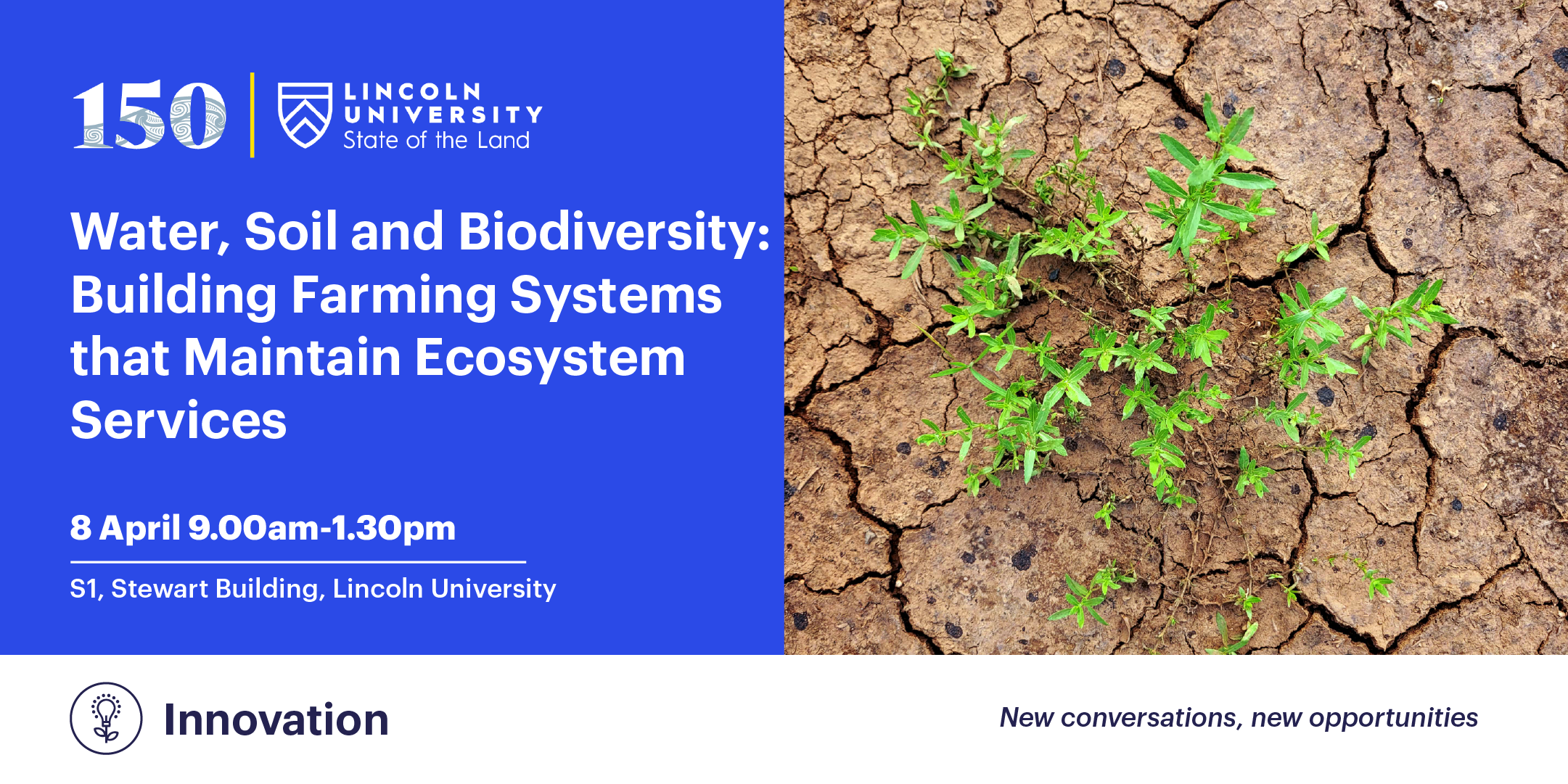
This year’s Innovation Series explores how innovation and sustainability are shaping the future of farming. For our first Innovation Series event in 2026, we turn our focus to water soil and biodiversity: how can New Zealand farmers continue to produce food and fibre while protecting the natural systems their businesses depend on?
With growing pressure from freshwater regulations, soil degradation, and biodiversity loss, the challenge lies in finding a balance between productivity and long-term resilience. Farms that support ecosystem services — such as clean water, fertile soils, and thriving habitats — are better equipped to withstand environmental and economic shocks. But achieving this balance requires fresh thinking, innovation, and collaboration across disciplines.
Join us as leading researchers and practitioners share practical strategies for integrating water, soil, and biodiversity management into modern farming systems. Together, we’ll explore innovative tools, land-use practices, and business models that reduce environmental impact while safeguarding productivity — offering a glimpse into what truly sustainable, future-ready farming looks like.
This special Innovation Series event will bring together experts from across research, industry, and farming communities for an insightful and solutions-focused discussion on how we can align profitable food production with the health of our natural environment.
Wednesday 8 April
9.00am - 1.30pm
S1, Stewart Building, Lincoln University
Programme
9.00am: Welcome
9.15am: Session 1: Foundations of Resilient Farm Ecosystems
Understanding water, soil, and biodiversity as productive assets
9.15am Keynote Speaker 1- Dr. Alistair Black (Lincoln University)
Soil health, pasture resilience, and water efficiency under climate pressure
Alistair can explain how soil structure, pasture species, and water-use efficiency influence productivity and resilience, drawing on dryland and irrigated systems research.
9.35am Keynote Speaker 2 - Dr. Rick Stoffels (New Zealand Institute for Earth Science)
Nutrients, waterways, and farm-scale mitigation
Rick will summarise why nutrients are a problem for waterway health, progress we are making towards sustainable farming, and the outstanding challenges ahead.
9.55am Keynote Speaker 3 - Matt Iremonger (Willesden Farms)
On-farm biodiversity as a production asset
Matt can show how shelterbelts, wetlands, and native plantings enhance ecosystem services, pest control, and farm resilience.
10.15am Q&A
10.20am: Break
10.35am: Session 2: Innovation in Integrated Land Management
Tools, technologies, and practices for sustainable production
10.35am Keynote Speaker 1 - Dr Catriona MacLeod (Bioeconomy Science Institute)
Biodiversity assessment tool for NZ farms
This talk will introduce an online calculator that allows farmers to rapidly self-assess the expected biodiversity outcomes of their farming practices. The tool only includes farm practices and biodiversity groups that New Zealand agricultural sectors (including farmers), NGOs and government agencies identified as deserving emphasis on New Zealand farms. Biodiversity scores were systematically derived with New Zealand biodiversity specialists using their expert judgement to classify each practice as more or less beneficial for biodiversity.
10.55am Keynote Speaker 2 - Justin Kitto, (Dairy NZ)
Practical tools for water and soil stewardship in dairy systems
Justin will share how DairyNZ is supporting farmers to improve water quality and soil health through practical tools, on-farm monitoring, and system design. He will highlight proven approaches to nutrient management and integrating biodiversity into productive dairy systems.
11.15am Keynote Speaker 3 - Dr Richard Morris (Lincoln University)
Thinking with the landscape: farm systems, NbS and iwi co-design
Richard will share practical insights into integrating wetlands, shelterbelts, and native plantings within a productive dairy system. He will highlight how biodiversity can improve water outcomes, strengthen farm resilience, and support profitable, sustainable production.
11.35am Q&A
11.40am: Break
11.50am: Session 3: Future-Proofing Profitable Farming Systems
Aligning environmental performance with business success
11.50am Keynote Speaker 1 - Professor Alan Renwick (Lincoln University)
Balancing science, policy, and farm economics
Alan can speak to trade-offs, regulatory realities, and how farmers can remain competitive while improving environmental outcomes.
12.10pm Keynote Speaker 2 - TBC
12.30pm Keynote Speaker 3 - TBC
12.50pm Q&A
12.55pm: Summary
1.05pm: Lunch and networking
1.30pm: Event finishes
Our Speakers

Prof. Alison Bailey, Lincoln University
As Professor of Farm Management at Lincoln University I have a role in developing the discipline through my own and others research. My research is primarily as a social scientist working within multi-disciplinary teams examining the relationship between agriculture, the environment and socio-economic criteria. The importance of this work cannot be understated. The world depends upon a productive agricultural industry that minimises the impact on the wider environment, is feasible and viable to implement, whilst also being acceptable to an increasingly engaged global population. The work has been undertaken across the European Union, United Kingdom, Africa and most recently New Zealand for both Government, commercial and charitable organisations. My work has led to improvements in how government legislation is implemented, reducing the burden for both government and the farming industry; and has led to new initiatives to simplify or change on-farm practice whilst managing risk, maintaining food safety and quality, and/or reducing the impact on the environment.
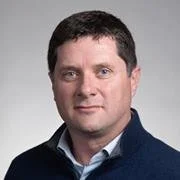
Dr. Alistair Black, Lincoln University
I teach pasture and crop agronomy in courses ranging from diploma to PhD. I research pastures and crops in the Dryland Pastures Research Programme. We investigate how legume-based pastures can enhance water and nitrogen use efficiency to combat climate change and variability in dryland regions. We examine how environment and management factors impact the growth and development of agricultural plants to develop agronomic solutions for drought-prone farms. I lead the Regenerative Agriculture Dryland Experiment (RADE): a new long-term, farmlet-scale experiment on campus that examines the total-farm impact – soil, plant, animal and financial – of regenerative agriculture. The RADE is our ‘living laboratory’ for teaching and learning of plant science and other disciplines on campus. My research also included strategies for profitable beef production, plant species diversity in grasslands, rhizobia in legumes and endophyte diversity in ryegrass. My recent international research included high altitude grasslands in collaboration with Qinghai University, China, and plant diversity modelling with Trinity College Dublin, Ireland.
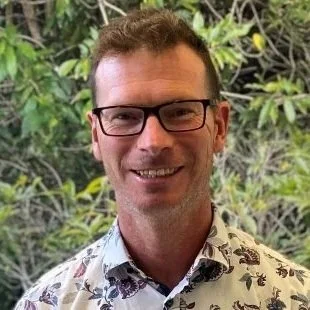
Dr. Rick Stoffels, Earth Sciences New Zealand
Rick has over a decade of experience providing science to support the management of freshwater ecosystems in both Australia and New Zealand. He employs a wide array of scientific approaches—from lab experiments to computer modelling—to generate information and tools to inform policy and management decisions at all levels of government. He has specialist expertise in adaptive management and monitoring of freshwater ecosystems; ecological modelling and uncertainty analysis; and the ecology of freshwater animal communities.
Dr. Catriona MacLeod, Bioeconomy Science Institute
Catriona is an interdisciplinary researcher focused on encouraging and empowering people to care for nature. Working at the interface of social and ecological systems, she takes an applied, systems-level approach to addressing complex socio-ecological challenges.
Her research explores how individual values, social networks, institutions and technology shape environmental decision-making. She works closely with diverse communities across Aotearoa New Zealand to co-design resources that build environmental awareness, skills and confidence, enabling informed action. This includes designing and implementing online citizen science campaigns, fostering communities of practice, and improving how scientific knowledge informs policy and management.
Catriona also brings strong ecological expertise, with interests spanning land use and agricultural intensification, environmental monitoring and management across production, conservation and urban landscapes, and behavioural ecology and evolution. Through advanced quantitative analysis and tailored data visualisation, she distils complex environmental data into clear, practical insights that support wiser environmental decision-making.
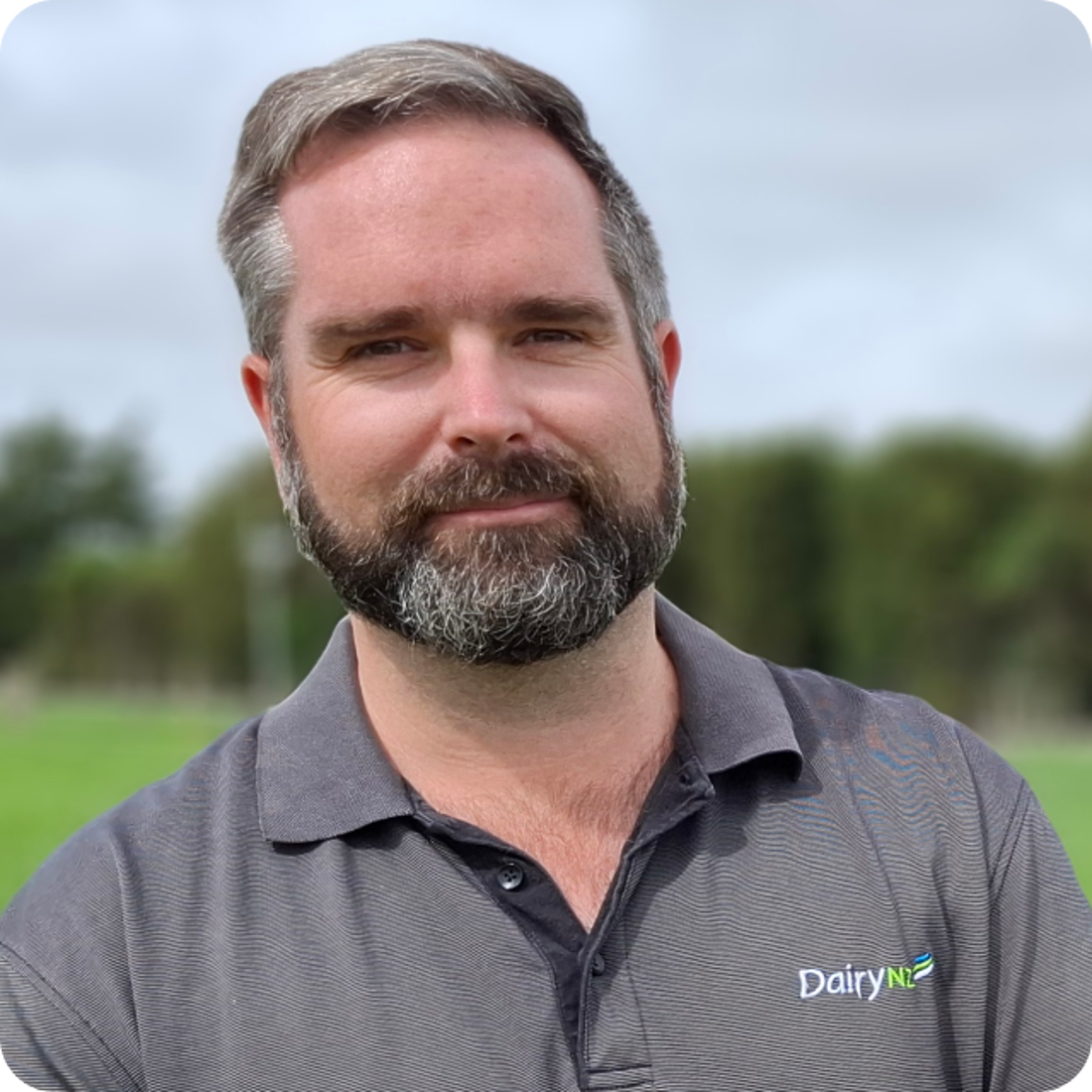
Dr. Justin Kitto, DairyNZ
Justin is an environmental specialist at DairyNZ, working at the intersection of farm performance and environmental stewardship. With a Master’s in Environmental Science (Freshwater Ecology), he brings together the latest environmental research, practical farm systems knowledge, and an understanding of market and policy expectations to help farmers integrate sustainable practices within profitable cows-and-grass systems.
Justin works closely with catchment groups, DairyNZ’s policy team, and farmers on the ground to turn environmental ambition into practical action. He has played a key role in shaping more effective, evidence-based policies by drawing on first-hand experience—whether developing on-farm wetlands, improving wintering practices, or providing expert input in regulatory and Environment Court processes. Passionate about collaborative research and farmer-led innovation, Justin is driven by supporting farmers who want to do things differently and make meaningful environmental gains.
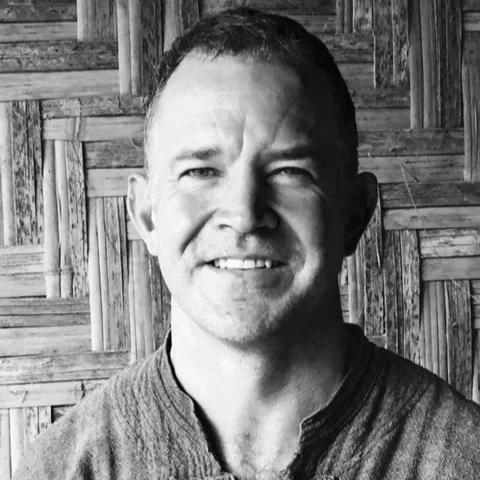
Dr Richard Morris, Lincoln University
Richard Morris is an architect and post-doctoral researcher based in the Department of Agricultural Sciences at Lincoln University. His work integrates spatial design, systems ecology, and land management to support climate adaptation in farm systems. He has a long-standing relationship with Te Whakatōhea and is currently working on a series of projects exploring the evidence-based design of Nature-based Solutions.

Prof. Alan Renwick, Lincoln University
My work focuses on agricultural and trade policy analysis, innovation in agrifood systems and analysis of agrifood value chains, all areas of fundamental importance to the functioning of the agrifood sector. Much of my career has involved applying economic analysis to assess the efficiency, effectiveness and equity of the EU Common Agricultural Policy (CAP), but more recently I have been focusing on the economics of existing and novel land-uses in New Zealand and technology adoption more generally. I am interested in quantifying the impact of innovation on the performance of either the agrifood system as a whole or of particular sectors within the industry. Linked to this is my research on the operation of value chains in developed and developing countries and the links with food security, which also provides useful information for policy makers. Many of my projects involve collaboration with researchers from other areas including agriculture, ecology, computer science and social science.
Click here to see more events