
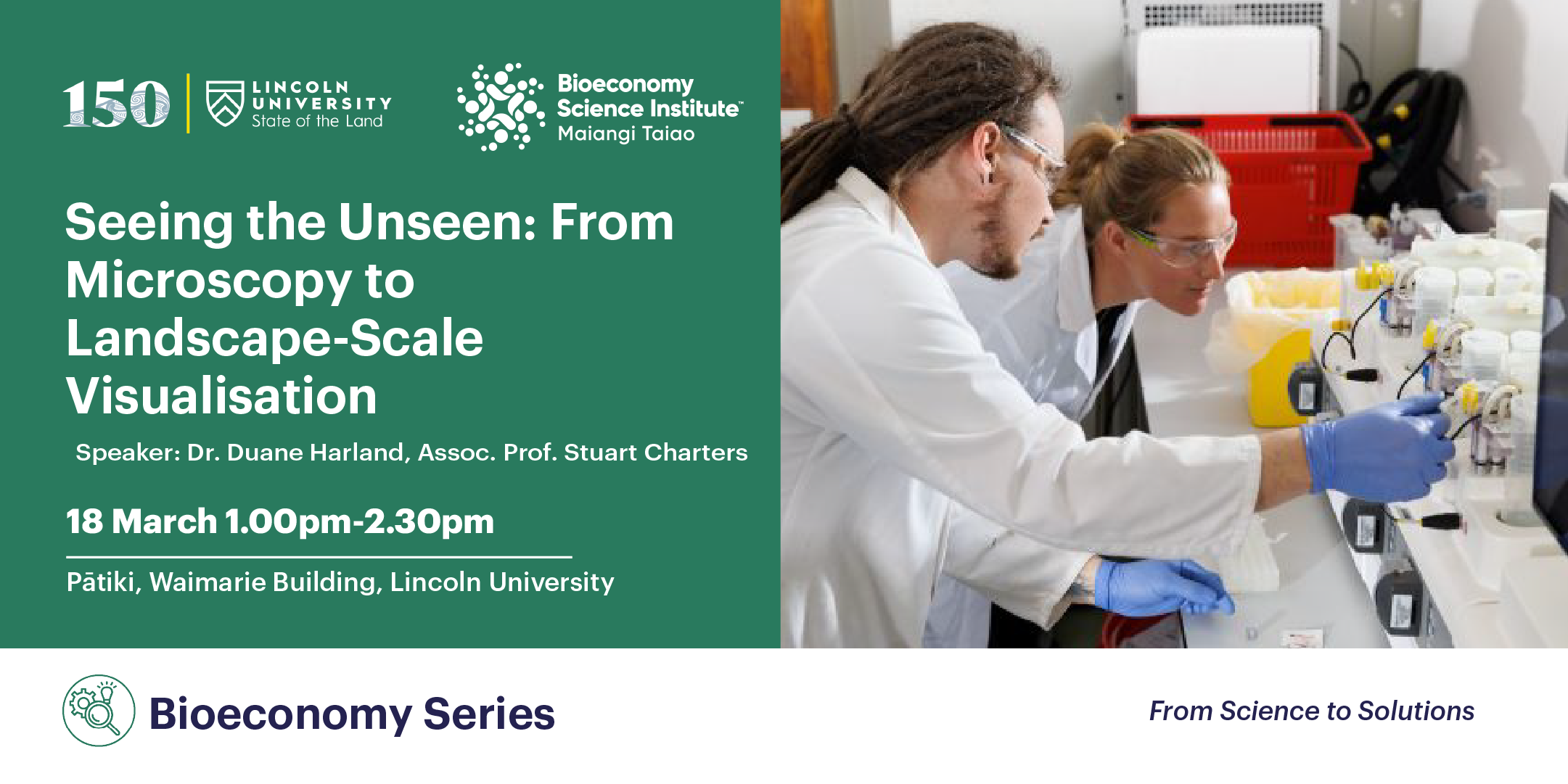
We’re excited to continue the Bioeconomy Series with our next event on Wednesday 18 March, turning our focus to the powerful technologies that help us see systems at radically different scales — from the nanoscale world inside materials and organisms, to entire landscapes viewed through advanced visualisation tools.
This session explores how cutting-edge imaging and data technologies are transforming the way we understand biological, environmental, and production systems. What can we learn when we zoom right in — and how do those insights connect with what we see when we zoom right out?
Duane Harland (Bioeconomy Science Institute) will take us deep into the world of advanced microscopy, showcasing the detailed technical capability and expertise housed within Bioeconomy Science Institute. Using real-world examples from across the science spectrum, Duane will explore different modes of electron microscopy imaging, alongside the challenges and opportunities of big-data image analysis. His talk will highlight how the latest instrumentation is pushing the boundaries of what can be observed, measured, and understood at the smallest scales.
Balancing this microscopic perspective, Assoc. Prof. Stuart Charters (Lincoln University) will shift the lens to the landscape level, discussing advanced technologies for large-scale visualisation. His contribution will explore how spatial data, modelling, and visual tools help us interpret complex systems across farms, catchments, and regions — and how these approaches support better decision-making in land, environment, and resource management.
Together, the speakers will connect insights across scales, demonstrating how advanced visualisation technologies — from electrons to ecosystems — are reshaping research, innovation, and our understanding of complex bioeconomic systems.
Join us for an engaging session that bridges the micro and the macro, and discover how seeing differently can lead to smarter, more integrated science.
Wednesday 18th March 2026
1.00pm-2.30pm
Inaka, Waimarie Building, Lincoln University
Timings
1:00 – 1:10 pm | Welcome and introductions
1:10 – 1:25 pm | Presentation 1 – Dr. Duane Harland, Bioeconomy Science Institute
1:25 – 1:40 pm | Presentation 2 – Assoc. Prof. Stuart Charters, Lincoln University
1:40 – 2:10 pm | Moderated discussion and audience Q&A
2:10 – 2:30 pm | Networking
About Our Speakers
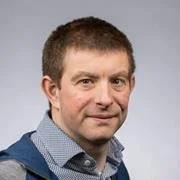
Assoc. Prof. Stuart Charters, Lincoln University
My research focus is on the intersection of technology, agriculture and ecology which we term, computational agroecology and also on the human aspects of computing, including Software Engineering, Visualisation and eResearch. I investigate how humans engage and interact with this technology. My research includes both the design and deployment of technology for deployment in the environment and on farm; presentation of data and information for consumption (mobile web and interactive visualisation, evidence based software engineering) and the processes around human engagement (eResearch and Evidence Based Software Engineering). The ability for people to effectively engage with technology and interpret data is essential for technology adoption and effective data based decision-making. My work in Evidence based Software Engineering improves the quality of research reporting, and provides methods and tools to allow research evidence to be assessed to understand the impact on practice or policy. I work collaboratively with colleagues in New Zealand, Australia and the UK. I was previously seconded to be the Director, SIGNAL ICT Graduate School, which focused on growing and developing tech professionals for New Zealand.
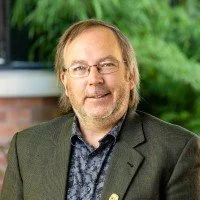
Dr. Duane Harland, Bioeconomy Science Institute
Dr Duane Harland is a senior scientist internationally recognised for advancing microscopy and microanalysis in biological and biomaterial research. His career spans the design of bespoke optical instruments for arthropod sensory studies through to world-leading electron microscopy of keratin and fibre systems. He has led major discoveries in nano-filament architecture, helical twist, and structure–property relationships in wool and human hair, enabled by innovative sample preparation and cutting-edge imaging approaches. Current work focuses on implementing these science discoveries into next-generation fibrous protein bio-based materials across several MBIE programmes.
Through his long service in Microscopy NZ, including two terms as president, he has helped build and mentor a vibrant national microanalysis community. Dr Harland leads a strong local imaging capability at the Bioeconomy Science Institute’s Tuhiraki facility in Lincoln, which employs a range of light, electron, and synchrotron-based imaging and spectroscopic capabilities into research and development in primary sector science, food, microbiology and bioprocessing.
Click here to see more events