
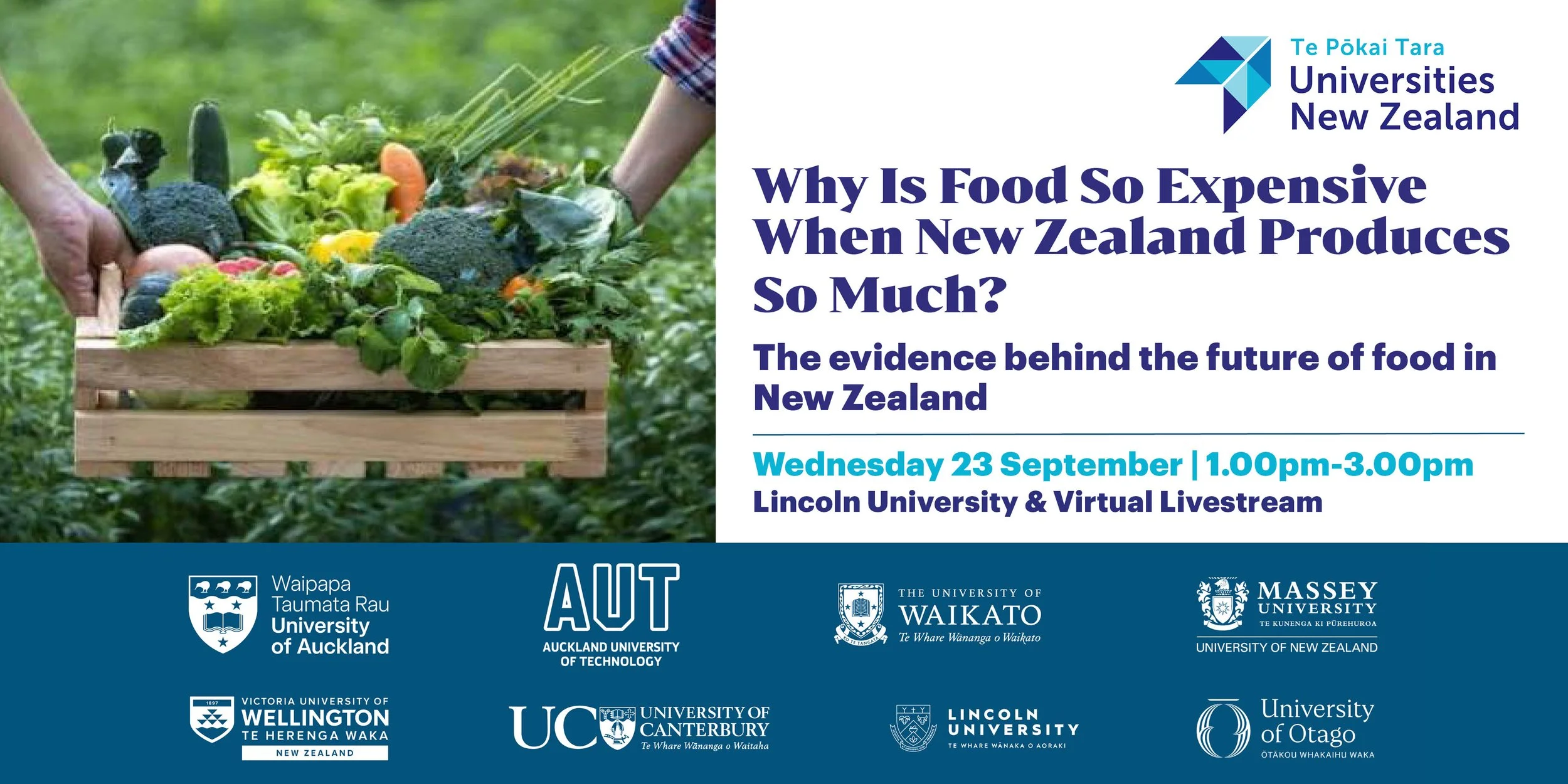
Food is something every New Zealander depends on every day, yet few of us stop to consider the complex systems that make our food supply possible.
New Zealand produces sufficient food to meet domestic needs many times over, but food affordability, supply chain resilience and equitable access remain significant challenges. Climate change, geopolitical uncertainty, global trade disruptions, energy and fuel costs, environmental pressures and changing consumer expectations are reshaping how food is produced, distributed and accessed.
As New Zealand prepares for the 2026 General Election, questions about the future of our food systems are becoming increasingly important. Why is food so expensive in a country that produces so much? How resilient are we to global shocks? How do we balance exports with domestic needs? And what role should government, industry and communities play in ensuring all New Zealanders can access affordable, nutritious food?
This inaugural Universities New Zealand Election Series brings together leading researchers from across Aotearoa to explore the evidence behind this important national conversation. Hosted by Lincoln University, the event is part of a new Universities New Zealand initiative bringing university research and expertise into the public conversations that matter as New Zealand approaches the 2026 General Election.
Rather than debating political positions or advocating particular policies, this forum will examine what current research tells us about New Zealand's food system, the challenges it faces and the choices that lie ahead.
The discussion will bring together perspectives spanning economics, food policy, consumer behaviour, public health, nutrition, food systems and indigenous food provenance, exploring how these different parts of the system connect.
Wednesday 23rd September
1.00pm-3.00pm
Inaka, Waimarie Building, Lincoln University
& virtual livestream
Timings
1.00pm — Welcome and introduction
1.05pm — Why are we talking about food?
Introduction to the Universities New Zealand Election Series and the question driving the event.
1.10pm — The big question: Why is food so expensive when New Zealand produces so much?
Prof Alan Renwick, Lincoln University
1.25pm — Seven perspectives on New Zealand's food future
Short, punchy contributions — 8 minutes each:
Food policy — TBC
Food access, security & equity — TBC
Food system resilience — Assoc Prof David Denkenberger, University of Canterbury
Indigenous food systems & provenance — Prof Nick Roskruge, Massey University
Health equity — Associate Professor Anna Matheson, Victoria University of Wellington
Nutrition — Emeritus Prof Elaine Rush, University of Auckland
Food systems — Assoc Prof Joya Kemper, University of Canterbury
2.15pm — Bringing the evidence together - What does the evidence tell us about the food system New Zealand needs for the future?
A facilitated discussion with all speakers
2.45pm — Audience Q&A
2.55pm — Closing remarks
3.00pm — Event Ends
As part of Universities NZ
Universities New Zealand—Te Pōkai Tara is the sector voice for all eight universities, representing their collective views nationally and internationally, championing the quality education they deliver, and the important contribution they make to New Zealand, economically, socially and culturally.
About Our Speakers

Professor Alan Renwick, Lincoln University
My work focuses on agricultural and trade policy analysis, innovation in agrifood systems and analysis of agrifood value chains, all areas of fundamental importance to the functioning of the agrifood sector. Much of my career has involved applying economic analysis to assess the efficiency, effectiveness and equity of the EU Common Agricultural Policy (CAP), but more recently I have been focusing on the economics of existing and novel land-uses in New Zealand and technology adoption more generally. I am interested in quantifying the impact of innovation on the performance of either the agrifood system as a whole or of particular sectors within the industry. Linked to this is my research on the operation of value chains in developed and developing countries and the links with food security, which also provides useful information for policy makers. Many of my projects involve collaboration with researchers from other areas including agriculture, ecology, computer science and social science.

Associate Professor David Denkenberger, University of Canterbury
David Denkenberger is an Associate Professor of Mechanical Engineering. He is a Penn State distinguished alumnus and is a registered professional engineer. He has 100 peer reviewed publications and is the most prolific authorin the existential/global catastrophic risk field. His work has been featured in >25 countries, over 300 popular articles. He has given over 80 external presentations, including ones at 8 of the global top 20 universities.
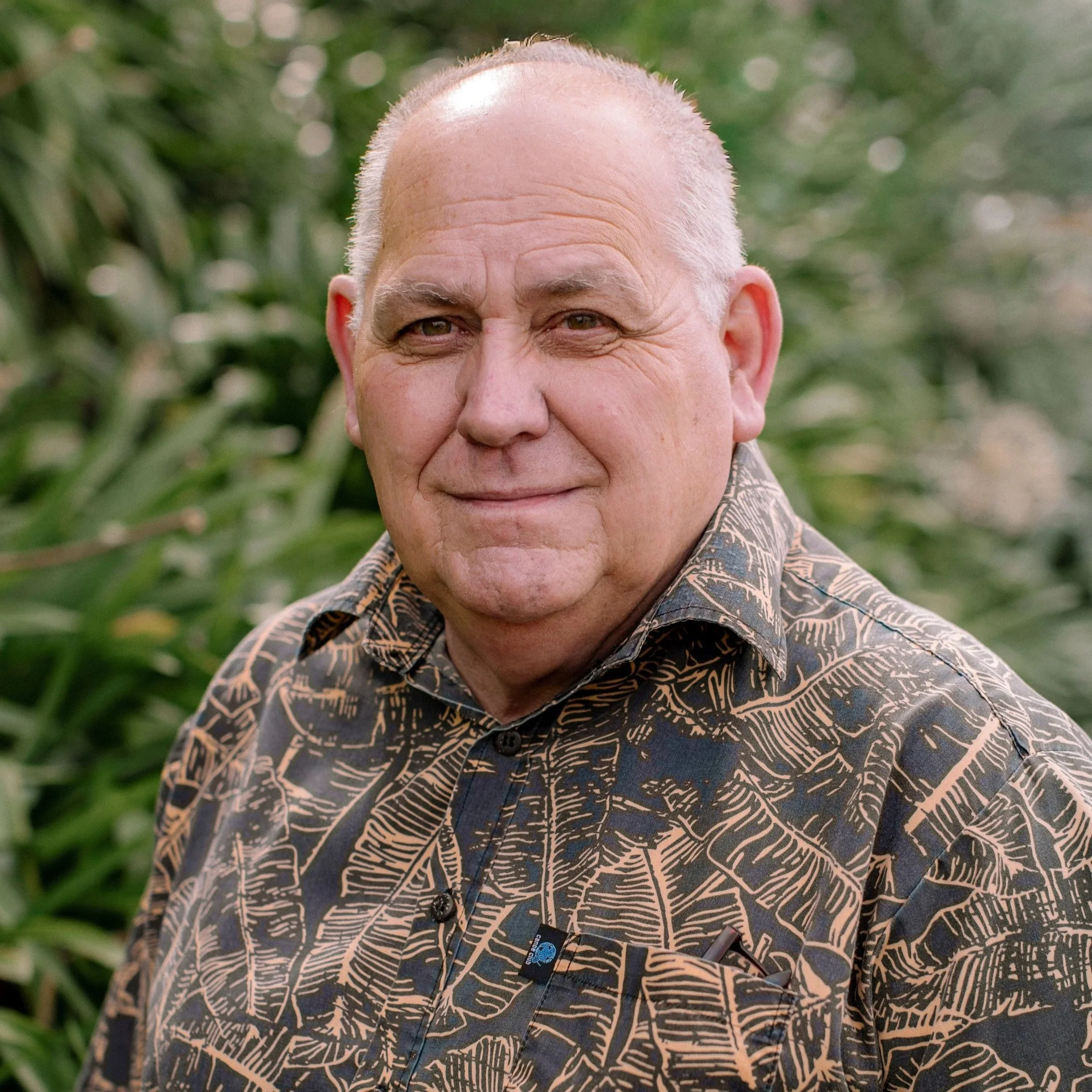
Professor Nick Roskruge, Massey University
Prof Nick Roskruge is Professor of Ethnobotany at Massey University, with expertise spanning horticulture, vegetable production, Māori resource management, ethnobotany and Māori agribusiness. With a career grounded in both industry and research, his work explores the relationship between Māori knowledge, land, food production and sustainable development. He has contributed extensively to research and initiatives supporting Māori horticulture and traditional food crops, including taewa (Māori potatoes), and has held leadership roles supporting Māori participation in science and agriculture.

Associate Professor Anna Matheson, Victoria University of Wellington
I am a public health researcher and educator with expertise in health promotion, health policy, and complex systems. My work focuses on understanding and addressing health inequality as a systemic issue shaped by social, environmental, and institutional factors, and on how health systems operate in practice. I focus on prevention, community-centred approaches, and system-level change, using interdisciplinary methods and relationships to work across sectors and settings. While grounded in health inequality, this work is relevant to a broader set of contemporary challenges in which outcomes emerge from interconnected systems. I have experience across research, policy, and large-scale public health initiatives, and I teach public health and health systems with a focus on systems thinking, policy processes, and applied problem-solving.
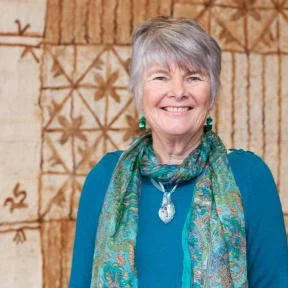
Emeritus Professor Elaine Rush, University of Auckland
Professor Emeritus Elaine Rush, MNZM, PhD has been involved in health and education for all her working career. In 2014 she was appointed as a Member of the New Zealand Order of Merit for services to public health. Her diverse research expertise in nutrition, food, body composition, and physiology has informed programmes and actions that will make a difference. She has over 200 peer-reviewed publications. More recently, she has focused on the food system and understanding the drivers of food insecurity and child poverty in Aotearoa. Elaine serves on the Council of the Health Research Council of New Zealand and provides mentorship and advice for example to Pacific Heartbeat and the Certificate of Proficiency in Pacific Nutrition.

Associate Professor Joya Kemper, University of Canterbury
Associate Professor Joya Kemper is a specialist in sustainable, ethical, and healthy consumption and production, with expertise spanning behaviour change, social and institutional change, and sustainable marketing.
She has published more than 50 peer‑reviewed articles in leading journals in marketing, sustainability, food systems, and social change. Her work is supported by major national and international funding.
Her research directly supports sector needs in sustainable consumption, healthy and sustainable food systems, environmental behaviour change, and circular economy innovation, providing evidence‑based insights for government agencies, industry partners, NGOs, and international organisations working toward more sustainable, equitable, and resilient systems.
Click here to see more events